Foundation Warning Signs in Winston-Salem Houses, One at a Time
Each warning sign makes more sense when you know its usual cause. In a crawl-space house, a lot of them lead back to the supports under the floor rather than to the outside walls. Below, every sign gets a brief answer, a sense of urgency, and a link to the repair page.
A dip along the middle of a floor usually means the girder or piers below; a tilt toward one wall, a settling footing; stair-step cracks in brick, a corner moving; standing water under the house, a drainage problem to fix before any framing repair.
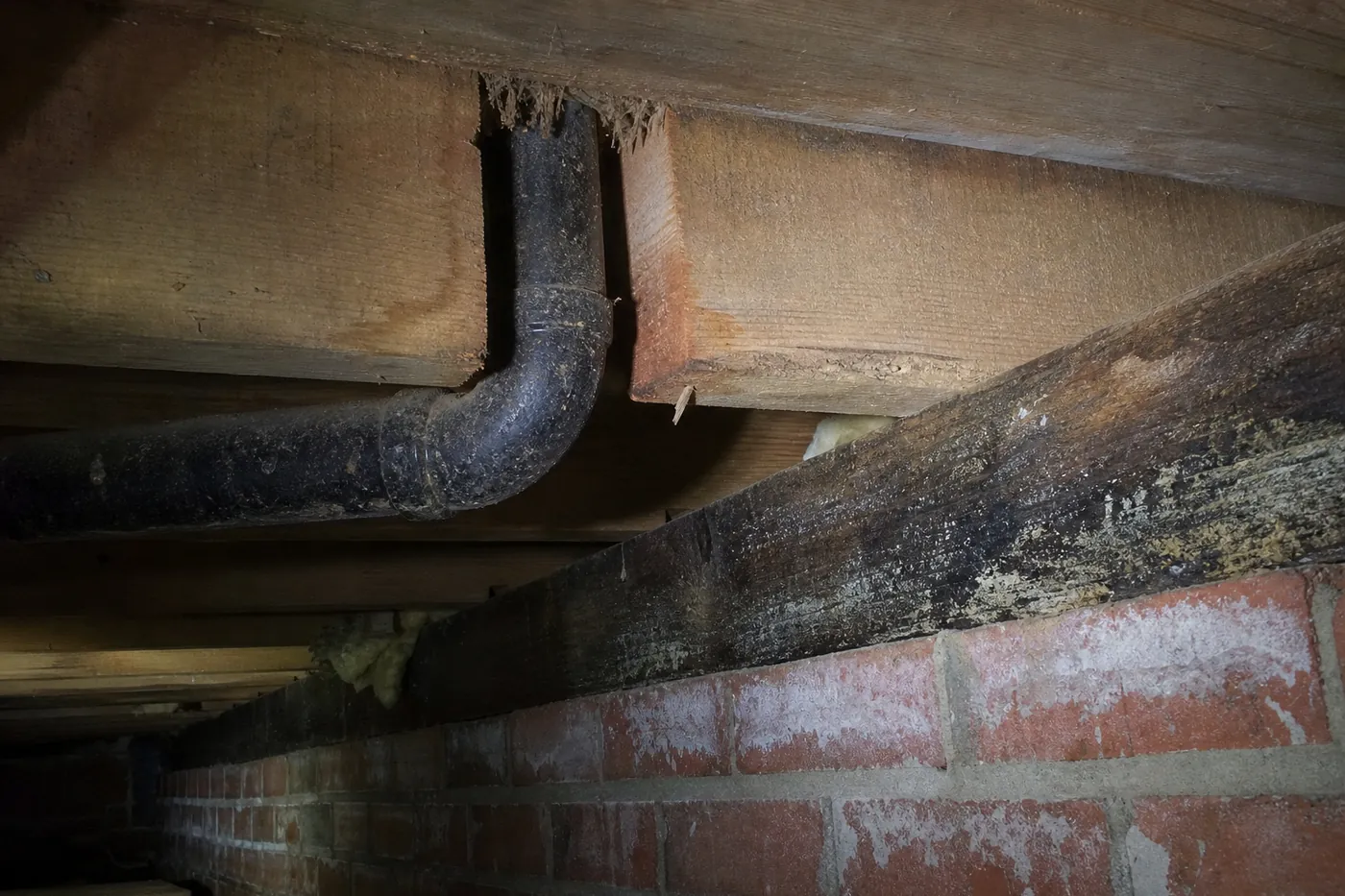
Why does my floor feel soft or bouncy in one spot?
Most often a joist below is cracked, rotted or was notched for a pipe or duct. It is rarely the foundation itself. Look from the crawl space with a flashlight for dark, soft or broken wood under that spot. One joist is a small repair; several in a row, or a soft rim at the outside wall, point to moisture. See piers and girders.
What does a dip along the middle of the house mean?
The girder or the piers carrying it have dropped or bent. A pier may have sunk, leaned or lost mortar, or the beam may sag between supports. It is rarely urgent, but it grows. Note which rooms dip and have the crawl space supports checked; see piers and girders.
My floor slopes toward one outside wall. Is that the foundation?
Probably. A steady slope toward one wall, especially with cracks in the brick on that side, usually means the footing there has settled. Write down readings with a level now and in a few months. If the slope grows, steel piers under that wall are the common repair; see sloping floors and house leveling.
What do stair-step cracks in the brick mean?
Part of the wall below is moving down or out, often at a corner where a downspout empties. Mark the ends of the crack with the date. If it widens, or doors nearby start to stick, have the footing checked; see cracks in brick and block.
My doors stick or swing open by themselves. Why?
Doors that bind only in humid months are usually swelling wood. Doors that drift open or shut on their own, with a tapered gap at the top, sit in a frame that has moved out of square, which follows the floor below. Write down the doors involved and the side of the house they are on, then check the floor slope in those rooms.
There are cracks above my interior doorways. Should I worry?
Diagonal cracks running up from the corners of door frames in drywall or plaster are common in houses that have settled a little. A few fine cracks that never change are cosmetic. New cracks, ones that reopen after patching, or ones that come with sticking doors suggest ongoing movement worth checking.
The soil in the crawl space is wet after every rain. Is that a problem?
Yes, for the long run. Wet soil weakens the ground under piers and keeps framing damp enough to rot. Start outside: gutters, downspouts and grading. If water still collects on the low side, a drain and sump is the usual fix; see water under the house.
I found damaged wood or insect signs under the house. What now?
Have a pest professional identify the cause and a specialist judge the strength of what is left, since wood that looks fine on the surface can be hollow. North Carolina's seller disclosure form asks about wood-destroying insects or organisms as well as the foundation, so keep records of any treatment and repair.
What are the floors and walls doing?
A floor that dips, a door that will not latch, a cracked brick corner, puddles under the house: a sentence or two is enough. It goes to one independent foundation and crawl space specialist who works in Winston-Salem.