Water Under the House: Crawl Space Drainage in Winston-Salem
Crawl space drainage in Winston-Salem matters because water under a house works slowly on everything that holds it up. Wet soil lets piers and footings settle, damp air softens sills and joists, and standing water after storms never fully dries in a closed, shaded space. Most of it starts outside.
Fixr (2026) lists regrading at $500–$3,000, gutters and downspouts at $3–$30 a foot and French drains at $10–$100 a foot. A sump pump runs $800–$2,000 installed (Fixr, 2025), and a crawl space vapor barrier $1,500–$4,000 (Fixr, 2025).
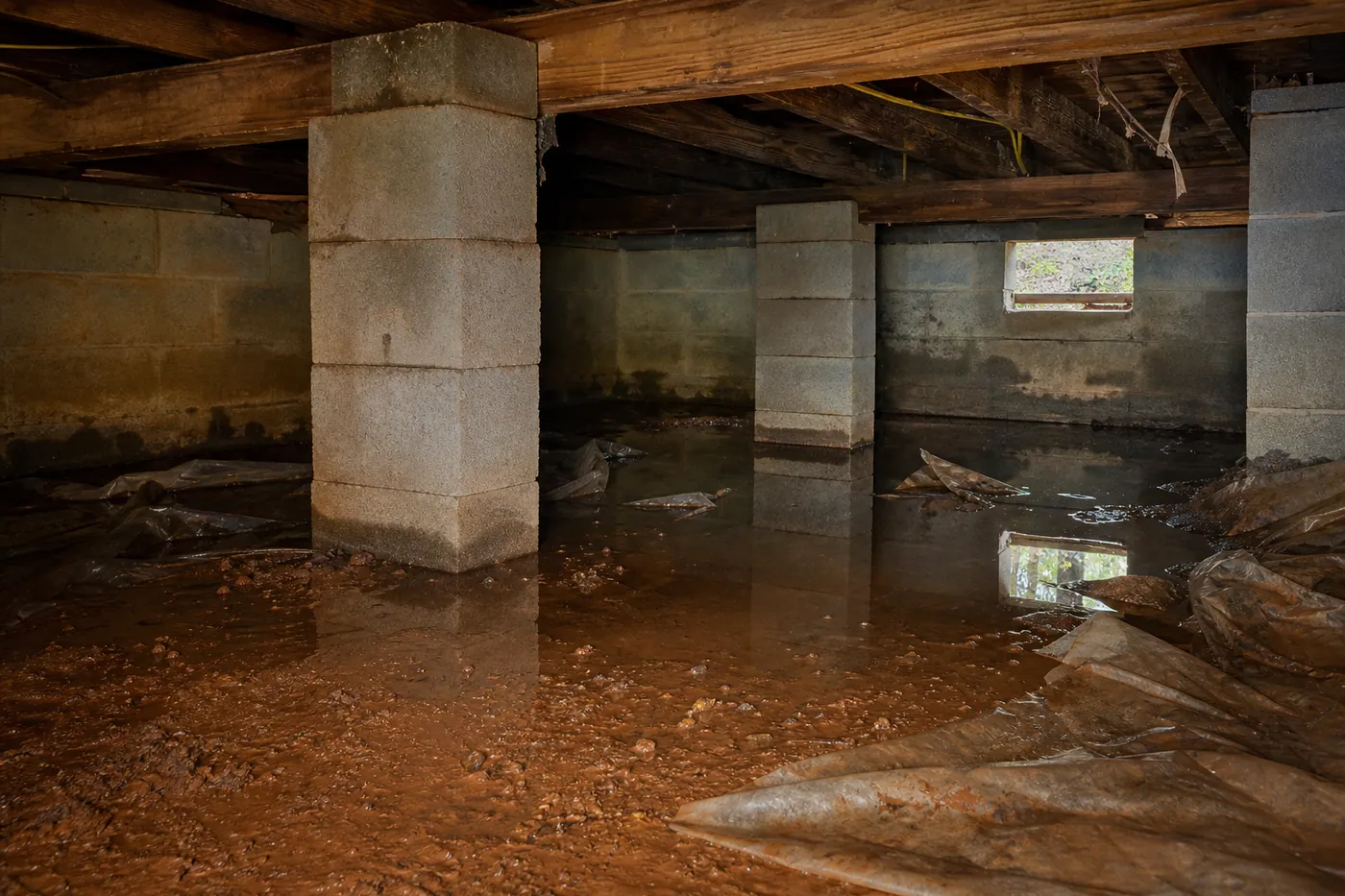
Where does water under the house come from?
- Roof water: missing or clogged gutters, downspouts that empty beside the wall.
- Grading: soil, mulch beds or a patio sloping toward the house, so rain runs to the foundation.
- A hillside behind the house: water moving through the ground on a sloped lot surfaces in the low side of the crawl space.
- Plumbing: a drip from a supply line, drain or water heater can soak one spot for months.
- Condensation: warm, humid summer air meeting cool surfaces in the crawl space.
Check after a heavy rain. NOAA's normals show about 11 days a year with an inch or more at Smith Reynolds Airport.
Crawl space drainage fixes, from simplest to most involved
- Gutters and downspout extensions: carry roof water several feet out, ideally to a slope that falls away.
- Regrading: reshape soil so it falls away from the wall; Fixr (2026): $500–$3,000.
- French drain outside: a gravel trench with pipe to intercept water on a sloped lot; Fixr (2026): $10–$100 a foot.
- Interior perimeter drain and sump: a drain at the low side of the crawl space leading to a pit and pump; Fixr (2025): $800–$2,000 for the pump installed.
- Vapor barrier: plastic over the soil to cut ground moisture; Fixr (2025): $1,500–$4,000.
What water does to the structure
Wood and soil both suffer. Wet soil under a pier footing loses strength, and the pier settles; framing that stays damp invites rot and insects, and Fixr (2025) prices wood rot repair under a house at $750–$5,000. The fix for the wood lasts only if the water is solved first, which is why a good bid for pier and girder repair says what will keep the crawl space dry afterward.
Before you sign for drainage work
Ask where the water is coming from and how they know. Ask where a sump will discharge; it should not dump water back toward the house or onto a neighbor. Ask whether a dehumidifier or encapsulation is needed, or only offered. Drainage alone is usually not load-bearing work, but new plumbing or electrical for a pump may need its own permit. Compare totals on the Winston-Salem foundation repair cost page.
Questions homeowners ask
Should a crawl space ever have standing water?
No. Damp soil after a storm can dry out, but water that stands for days means the site is not draining away from the house. Start with gutters, downspouts and grading, then check plumbing. If water still collects at the low side, a drain to a sump is the usual next step.
What are the floors and walls doing?
A floor that dips, a door that will not latch, a cracked brick corner, puddles under the house: a sentence or two is enough. It goes to one independent foundation and crawl space specialist who works in Winston-Salem.